Fort Monckton is one of the most remarkable historic coastal fortifications in Hampshire, England. Situated on the shores of Stokes Bay in Gosport, this impressive fortress has played an important role in Britain’s military history for more than two centuries. Although it is not widely open to the public, Fort Monckton continues to attract historians, architecture enthusiasts, and travellers who appreciate Britain’s rich defensive heritage.
The story of Fort Monckton reflects the changing needs of British coastal defence from the eighteenth century to the modern era. From protecting Portsmouth Harbour against foreign threats to supporting military training, the fort has witnessed many significant historical events. This guide explores its fascinating history, strategic location, unique architecture, and the nearby attractions that make the surrounding area worth visiting.
What Is Fort Monckton?
Fort Monckton is a historic military fort located in Gosport, Hampshire, overlooking the Solent. It was originally constructed during the late eighteenth century as part of Britain’s efforts to strengthen its coastal defences against possible invasion. Its strategic position allowed soldiers to monitor naval activity while protecting Portsmouth Harbour, one of the country’s most valuable naval bases.
Unlike many historic forts that have become museums, Fort Monckton has remained associated with military use throughout much of its history. This continued role has helped preserve many original features while making the site one of the most significant surviving examples of British coastal fortification. Today, it represents an important chapter in the nation’s military and architectural heritage.
The History of Fort Monckton
The origins of Fort Monckton date back to a period when Britain faced increasing threats from European naval powers. Construction began to improve the country’s coastal security, and the fort quickly became an essential defensive position guarding the entrance to Portsmouth Harbour. Its design reflected the military engineering principles of the time, combining strength with practical defence.
Throughout the nineteenth century, the fort underwent several improvements as military technology evolved. During both the First and Second World Wars, Fort Monckton continued to support Britain’s defence efforts by adapting to new strategic requirements. Its long service history highlights its importance in protecting one of the Royal Navy’s most valuable locations.
Where Is Fort Monckton Located?
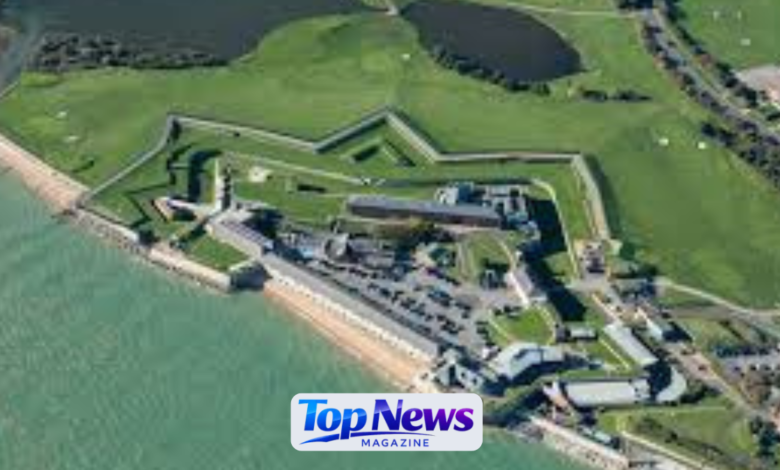
Fort Monckton stands beside Stokes Bay in the town of Gosport, Hampshire, on England’s southern coastline. The fort enjoys panoramic views across the Solent towards the Isle of Wight and sits close to Portsmouth Harbour. This exceptional location made it an ideal observation point for monitoring shipping movements and defending the surrounding coastline.
Visitors can easily reach the area by car, train, or ferry services connecting Portsmouth and Gosport. Although access to the interior of Fort Monckton is generally restricted, the nearby seafront offers excellent walking routes, attractive beaches, and outstanding viewpoints where visitors can admire the historic structure from a distance.
Architecture and Design of Fort Monckton
The architectural design of Fort Monckton demonstrates the advanced military engineering techniques of its era. Thick brick walls, protective earthworks, defensive bastions, and a surrounding moat were carefully planned to withstand enemy attacks. Every section of the fort was designed with both defence and long-term durability in mind.
Over time, modifications were introduced to accommodate new weapons and changing military tactics. Despite these alterations, much of the original character has been preserved, allowing historians to study its development over several centuries. The impressive construction continues to showcase the craftsmanship and engineering expertise that defined Britain’s coastal fortifications.
Military Role and Historical Importance
The main purpose of Fort Monckton was to strengthen the defence of Portsmouth Harbour, a location that has long been central to the Royal Navy. Soldiers stationed at the fort monitored naval activity, defended the coastline, and prepared for potential attacks during periods of international conflict.
As warfare changed, the responsibilities of Fort Monckton also evolved. Rather than becoming obsolete, the site adapted to modern military requirements and continued serving defence-related functions. This remarkable continuity has ensured that the fort remains one of Hampshire’s most historically significant military landmarks.
Can You Visit Fort Monckton?
Many visitors hope to explore Fort Monckton, but public access is usually restricted because the site continues to be used for official purposes. Unlike many historic castles and forts managed as tourist attractions, entry opportunities are limited and only occasionally available during special events.
Fortunately, the surrounding area offers plenty for visitors to enjoy. Stokes Bay provides beautiful coastal scenery, peaceful walking trails, and excellent opportunities for photography. Nearby Gosport also features museums, historic waterfront attractions, cafés, and maritime landmarks that complement a visit to the area.
Interesting Facts About Fort Monckton
One of the most interesting facts about Fort Monckton is its exceptionally long period of military service. While many similar coastal forts have become museums or private properties, this historic site has remained connected with Britain’s defence establishment for generations, making it unique among many surviving fortifications.
Another fascinating feature is its commanding position overlooking the Solent. This strategic viewpoint allowed military personnel to observe approaching vessels and respond quickly to potential threats. The combination of historical importance, impressive engineering, and coastal scenery continues to make the fort an object of interest for researchers and heritage enthusiasts alike.
Attractions Near Fort Monckton
Visitors exploring the area around Fort Monckton will discover several attractions that enhance their experience. Stokes Bay is popular for its peaceful beach, coastal walks, and spectacular sea views. The nearby Gosport waterfront also offers marinas, local restaurants, and family-friendly attractions throughout the year.
A short ferry journey leads to Portsmouth Historic Dockyard, one of Britain’s leading maritime heritage destinations. Here, visitors can explore famous naval ships, museums, and exhibitions celebrating the country’s seafaring history. Together, these attractions provide an enjoyable day out for anyone interested in military history and coastal landscapes.
Why Fort Monckton Still Matters Today
Fort Monckton remains an important symbol of Britain’s military heritage and coastal defence strategy. Its survival offers historians valuable insight into eighteenth-century engineering, changing defence systems, and the evolution of military architecture over several centuries. Preserving such landmarks helps future generations understand the nation’s historical development.
Beyond its military significance, the fort also contributes to Hampshire’s cultural identity. Although direct access is limited, public interest continues to grow through historical research, photography, and heritage tourism. The surrounding landscape and nearby attractions ensure that the legacy of Fort Monckton remains alive for visitors and history enthusiasts alike.
Conclusion
Fort Monckton is far more than an old coastal fortress. It represents centuries of British military planning, engineering excellence, and national defence. From its strategic location overlooking the Solent to its impressive architecture and continuing military connections, the fort remains one of Hampshire’s most fascinating historic landmarks.
Whether you are researching British history, exploring Hampshire, or simply interested in historic forts, Fort Monckton offers a compelling story. While access to the site itself may be limited, its remarkable heritage, stunning coastal setting, and nearby attractions make it a destination well worth learning about and visiting from the surrounding public areas.
Frequently Asked Questions
What is Fort Monckton?
Fort Monckton is a historic coastal fort in Gosport, Hampshire, built to help defend Portsmouth Harbour.
Where is Fort Monckton located?
It is located beside Stokes Bay in Gosport on the southern coast of Hampshire, England.
Can visitors enter Fort Monckton?
Public access is generally restricted because the site continues to have official military use.
Why was Fort Monckton built?
It was constructed during the eighteenth century to strengthen Britain’s coastal defences against possible naval attacks.
What can visitors see near Fort Monckton?
Nearby attractions include Stokes Bay, Gosport waterfront, Portsmouth Historic Dockyard, the Royal Navy Submarine Museum, and scenic coastal walking routes.
Is Fort Monckton historically important?
Yes. It has played an important role in British coastal defence for more than two centuries and remains one of Hampshire’s most significant military landmarks.
Also Read: houses for sale in wolviston village