The Source of the Nile is one of Africa’s most fascinating geographical subjects, attracting historians, explorers, travellers and curious readers for centuries. The Nile is famous for flowing through some of the world’s most historically important landscapes, particularly ancient Egypt, yet its journey begins much farther south. Understanding its origins provides an interesting look at eastern African geography, interconnected waterways, ancient exploration and the communities that have depended on this remarkable river.
The question of where the Nile truly begins is more complicated than it may initially appear. Several lakes, rivers and tributaries contribute to the enormous Nile river system, which is why different geographical definitions can produce slightly different answers. Lake Victoria and the White Nile are commonly associated with its origins, while the Blue Nile rises in Ethiopia. Together, these waterways create one of the most important river systems in Africa.
What Is the Source of the Nile?
The Source of the Nile refers to the headwaters that eventually contribute to the Nile’s long journey towards the Mediterranean Sea. Lake Victoria is widely associated with the river’s upper reaches, particularly through the Victoria Nile in Uganda. However, the Nile is not created by a single straightforward stream. Its extensive network includes several rivers and lakes spread across a large part of eastern Africa.
The White Nile and Blue Nile are the two principal branches of the main river. The White Nile is connected with the Great Lakes region and travels northwards through Uganda and South Sudan. The Blue Nile begins in Ethiopia and carries substantial amounts of water towards Sudan. These two major waterways meet at Khartoum, where they form the main Nile and continue towards Egypt.
Where Is the Source of the Nile Located?
The Source of the Nile is commonly linked to Lake Victoria, one of Africa’s largest freshwater lakes. Lake Victoria is shared by Uganda, Kenya and Tanzania, creating a vast geographical area connected with the upper Nile system. In Uganda, water leaves the lake through the Victoria Nile, which then begins its northward journey through a changing landscape.
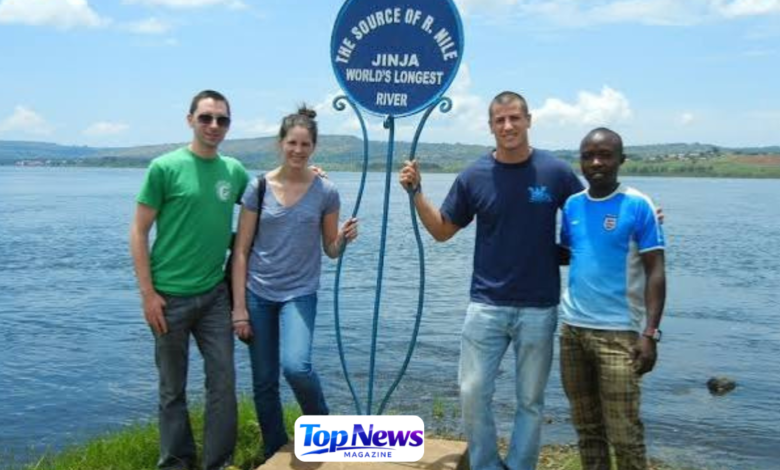
Jinja in Uganda is particularly famous for its connection with the Nile’s origins. The town has become a popular destination for people interested in geography, history and outdoor activities. Although the precise ultimate source can be debated depending on geographical methods, the Lake Victoria region remains one of the most widely recognised places associated with the beginning of the Nile.
The White Nile and Its Importance
The White Nile forms an important part of the Nile system and is closely connected with the river’s southern headwaters. It flows northwards from the Great Lakes region, passing through Uganda before entering South Sudan. Along its route, the river moves through remarkable landscapes and wetlands before continuing towards Sudan, where it eventually meets the Blue Nile.
One of the White Nile’s notable characteristics is its relatively steady flow. The river passes through the Sudd, one of the world’s largest wetlands, where water spreads across an enormous area. This wetland supports wildlife, vegetation and local communities. The White Nile therefore has significance beyond its contribution to the main river, providing an important ecological environment along its journey.
The Blue Nile and Lake Tana
The Blue Nile begins in the Ethiopian highlands and is strongly associated with Lake Tana. This large lake is an important geographical feature of Ethiopia and supplies water to the Blue Nile system. From the highlands, the river travels westwards and northwards towards Sudan, carrying water and sediment that have historically contributed to the fertility of downstream regions.
At Khartoum, the Blue Nile meets the White Nile and creates the main Nile. The Blue Nile is particularly important because its seasonal flows can contribute a substantial amount of water to the combined river. Its historical importance is also linked with agriculture, settlement and the development of communities that have relied on the river’s resources for generations.
The Search for the Source of the Nile
The search for the Source of the Nile was one of the great geographical mysteries of earlier centuries. Ancient Egyptians understood the importance of the river but had little knowledge of its distant headwaters. For generations, scholars and travellers developed theories about where the enormous river began, while the difficult landscapes of central and eastern Africa made exploration challenging.
During the nineteenth century, European explorers travelled through unfamiliar territories in search of the Nile’s origins. John Hanning Speke became particularly associated with Lake Victoria and argued that it was the main source. Richard Francis Burton, David Livingstone and Henry Morton Stanley also played important roles in the broader exploration of the region. Their journeys gradually improved geographical knowledge of the Nile basin.
The Nile’s Journey Towards the Mediterranean
After leaving the upper regions of eastern Africa, the Nile follows an extraordinary route towards the Mediterranean Sea. Its waters travel through Uganda, South Sudan and Sudan before the White Nile and Blue Nile meet at Khartoum. From there, the main river continues northwards through Sudan and into Egypt, passing through landscapes that vary dramatically along the way.
The river eventually reaches the fertile Nile Delta in northern Egypt. There, the waterway divides into several channels before flowing into the Mediterranean. The contrast between the Nile’s tropical headwaters, vast wetlands and downstream desert landscapes makes its journey particularly remarkable. Few rivers have influenced such a wide range of environments and human societies across their course.
Why the Nile Was Important to Ancient Egypt
The Nile was fundamental to the development of ancient Egyptian civilisation. In an otherwise dry region, the river provided a reliable source of water and helped create fertile agricultural land. Seasonal flooding historically deposited nutrient-rich material across parts of the valley, allowing farmers to grow crops and support increasingly large communities along the riverbanks.
Beyond agriculture, the Nile served as a major transport route and supported fishing, trade and communication. It also became deeply connected with Egyptian religion and culture. The river represented life, fertility and prosperity, influencing beliefs and traditions for thousands of years. Its importance explains why the Nile remains inseparable from the history and identity of ancient Egypt.
Interesting Facts About the Source of the Nile
One of the most interesting facts about the Source of the Nile is that there is no universally simple answer to the question of its exact location. The river has numerous tributaries and connected waterways, meaning that geographers can approach the idea of a “source” in different ways. Some focus on the longest headwater, while others refer to major lakes or recognised branches.
Another fascinating fact is the enormous geographical distance covered by the Nile system. Its waterways connect highlands, lakes, wetlands, savannahs and deserts before eventually reaching the Mediterranean. The river also crosses regions with very different climates and ecosystems. This extraordinary journey helps explain why the Nile has remained a subject of geographical curiosity for centuries.
The Nile Basin and Its Importance
The Nile Basin covers an enormous area of eastern and north-eastern Africa. Countries connected with the wider basin include Uganda, Tanzania, Kenya, Rwanda, Burundi, South Sudan, Sudan, Ethiopia and Egypt. The river system provides water for agriculture, domestic use, livestock and other activities, making it an essential resource for millions of people.
The basin is more than the main river itself. Lakes, wetlands, streams and tributaries create a complex network of freshwater environments. These areas support wildlife and provide livelihoods for communities living near them. Because the water resources are shared across national borders, the Nile basin also has major environmental and development significance, particularly when considering long-term water management.
The Modern Importance of the Nile
The Nile continues to play an essential role in modern life. Agriculture remains closely connected with its waters, particularly in Egypt and Sudan, where irrigation helps support farming in regions surrounded by dry landscapes. The river also provides freshwater and contributes to transport, tourism and economic activity, making its resources valuable far beyond their historical importance.
Modern pressures have created new challenges for the Nile system. Population growth, increasing water demand, environmental changes and agricultural requirements can place pressure on available resources. Protecting the Source of the Nile and its connected ecosystems is therefore important for the future. Responsible water management and environmental protection can help maintain the river’s value for both people and wildlife.
Tourism Around the Nile’s Origins
Jinja in Uganda is one of the best-known destinations associated with the Source of the Nile. Visitors can explore the surrounding landscape, learn about the river’s history and experience the waterways connected with Lake Victoria. The region is also known for outdoor activities, scenic surroundings and opportunities to discover local culture.
Tourism can provide valuable economic opportunities for communities near the Nile’s upper reaches. However, responsible travel is important in environmentally sensitive areas. Visitors should respect local communities, avoid damaging natural habitats and follow guidance from local authorities and tourism providers. Preserving the landscape helps ensure that future generations can continue to experience the remarkable areas associated with the Nile’s origins.
Source of the Nile and the Longest Headwater
The phrase Source of the Nile can sometimes be confusing because the river has several connected headwaters. A geographical source may be identified by tracing the longest continuous watercourse, while another approach may focus on the most significant lake or tributary. Consequently, different explanations may mention Lake Victoria, the White Nile or more distant waterways in the Great Lakes region.
Understanding this distinction makes the subject much clearer. Rather than expecting one small point to provide an uncomplicated answer, it is better to view the Nile as an extensive interconnected system. Its origins stretch across a large geographical region, and several waterways contribute to the river that eventually becomes the main Nile in Sudan.
Environmental Importance of the Nile’s Headwaters
The ecosystems surrounding the Nile’s upper reaches are extremely valuable. Lakes, wetlands, rivers and surrounding habitats provide homes for numerous species while supporting communities that depend on fishing, agriculture and freshwater. These natural environments also help regulate water flows and maintain biodiversity across parts of eastern Africa.
Environmental pressures can affect these ecosystems in several ways. Pollution, habitat loss, population growth and rising demand for freshwater may place stress on waterways and wetlands. Protecting the river system requires careful planning and sustainable management. Conservation efforts around the Nile’s headwaters can benefit wildlife while also helping communities maintain access to important natural resources.
Key Facts About the Nile’s Origins
The Source of the Nile is widely associated with Lake Victoria and the White Nile, while the Blue Nile begins in Ethiopia near Lake Tana. These major branches eventually meet at Khartoum before the main Nile continues northwards. This geographical relationship is essential to understanding why the Nile’s origins are often discussed from several different perspectives.
The river’s significance extends far beyond its geographical origin. It has shaped ancient civilisations, supported modern populations and created diverse ecosystems along its enormous route. From the Great Lakes region to the Mediterranean, the Nile connects landscapes and communities across Africa. Its origins remain fascinating because they combine complex geography with an extraordinary human history.
Conclusion
The Source of the Nile is a fascinating subject that combines geography, exploration, history and environmental importance. Lake Victoria and the White Nile are strongly associated with the river’s origins, while the Blue Nile adds another major branch from the Ethiopian highlands. Together, these waterways form a remarkable river system that travels across several countries before reaching the Mediterranean.
The history of the Source of the Nile also demonstrates how difficult it was for early explorers to understand the geography of eastern Africa. Today, modern mapping has made the river system much clearer, but its origins remain intriguing because of their complexity. From ancient Egyptian civilisation to modern communities, the Nile continues to be one of Africa’s most important and remarkable natural features.
Frequently Asked Questions
Where is the Source of the Nile?
The Source of the Nile is commonly associated with the Lake Victoria region of eastern Africa, particularly the Victoria Nile in Uganda.
Is the Source of the Nile in Uganda?
Uganda is closely associated with the Source of the Nile because the Victoria Nile flows from Lake Victoria near Jinja.
Where does the White Nile begin?
The White Nile is connected to the Great Lakes region of eastern Africa, with Lake Victoria forming an important part of its upper river system.
Where does the Blue Nile begin?
The Blue Nile rises in Ethiopia and is closely associated with Lake Tana and the surrounding Ethiopian highlands.
Which rivers form the main Nile?
The White Nile and Blue Nile meet at Khartoum in Sudan and form the main Nile, which then flows north towards Egypt.
Why was finding the Source of the Nile difficult?
The search was difficult because the Nile has numerous tributaries, lakes and distant headwaters spread across challenging and largely unmapped regions.
Why is the Nile important to Egypt?
The Nile provides essential water and supports agriculture, settlements, transport and economic activity in Egypt.
Also Read: bs8888