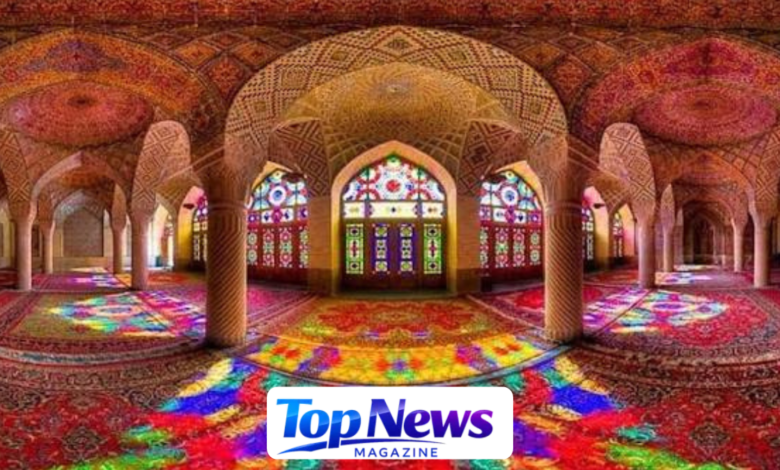
Nasir al-Mulk Mosque is one of the most remarkable historic landmarks in Shiraz, Iran. Often known as the Pink Mosque, it attracts visitors with its vivid stained-glass windows, intricate tilework and elegant Persian architecture. When morning sunlight enters the prayer hall, coloured reflections spread across the interior, creating an enchanting scene that has made this historic building famous among travellers, photographers and architecture enthusiasts.
Beyond its striking appearance, the mosque represents an important chapter in Iran’s architectural and cultural history. Built during the Qajar period, it combines traditional Persian design with sophisticated decorative craftsmanship. Every arch, tile, window and column contributes to the building’s distinctive character. For anyone exploring Shiraz, a visit provides an opportunity to experience history, artistry and religious architecture within one extraordinary setting.
The History of Nasir al-Mulk Mosque
Construction of Nasir al-Mulk Mosque began during the Qajar era in the nineteenth century, a period noted for distinctive developments in Persian architecture and decorative arts. The building was commissioned by Mirza Hasan Ali Nasir al-Mulk, whose name became permanently associated with the mosque. Its construction and decoration reflected the considerable skill of craftsmen working in Shiraz during this important period.
The history of the mosque is closely connected with the cultural identity of Shiraz. Rather than being designed simply as a functional religious building, it was developed with considerable attention to artistic detail and visual harmony. Its surviving architecture provides modern visitors with an insight into the craftsmanship, religious traditions and aesthetic values that shaped historic Persian buildings during the Qajar period.
Why Is It Called the Pink Mosque?
The name Pink Mosque comes from the prominent use of rose and pink-coloured tiles throughout parts of the building. These tiles feature delicate floral designs and intricate patterns that create a warm and distinctive appearance. Although the official name remains Nasir al-Mulk Mosque, the popular nickname has become widely recognised internationally and is now strongly associated with photographs of the building.
Pink is not the only colour found throughout the mosque. Blue, yellow, green and red details also appear across its decorative surfaces, producing a rich visual composition. The carefully balanced colours demonstrate the sophistication of Persian tilework and help explain why the building looks so different as sunlight changes. Its nickname therefore captures only one aspect of a much more colourful architectural masterpiece.
The Architecture of Nasir al-Mulk Mosque
The architecture of Nasir al-Mulk Mosque showcases the artistic traditions of Persian Islamic design while reflecting the distinctive character of the Qajar period. Visitors can discover an elegant entrance, decorative arches, a central courtyard, impressive prayer spaces and carefully arranged columns. The building demonstrates how architectural structure and decoration can work together to create an environment that feels both balanced and visually captivating.
One of the most appealing qualities of the architecture is the attention given to proportion and detail. Geometric patterns, floral motifs, arches and ornamental surfaces appear throughout the complex without overwhelming its underlying structure. The mosque encourages visitors to look closely, as small details can be just as fascinating as its famous stained-glass windows. Exploring slowly reveals the extraordinary level of craftsmanship invested in the building.
The Famous Stained-Glass Windows
The stained-glass windows are undoubtedly among the most recognisable features of Nasir al-Mulk Mosque. Their colourful panes allow sunlight to enter the prayer hall in vibrant shades, transforming the interior into a constantly changing display. Instead of merely providing illumination, the windows become an essential part of the building’s decoration, connecting the architecture with the natural world outside.
Morning is particularly special because sunlight can create colourful patterns across carpets, floors and architectural surfaces. The effect changes according to the position of the sun and the surrounding light conditions, meaning the interior can look different from one visit to another. This relationship between sunlight and coloured glass is one of the key reasons the mosque has become such an admired destination for photographers.
Inside the Prayer Hall
The interior of the mosque combines stained glass with beautifully decorated tiles, elegant columns, arches and patterned surfaces. Together, these features create a harmonious visual experience that changes as daylight moves through the space. The prayer hall demonstrates how traditional Persian architecture could transform a functional religious environment into a place filled with colour, rhythm and carefully considered artistic expression.
Visitors should take time to observe the interior rather than focusing only on the most famous photographic viewpoints. The columns, floor coverings, tiled walls and decorative details contribute to the overall atmosphere. When the coloured light reaches these surfaces, the result is especially impressive. The experience is not simply about seeing beautiful decoration; it is about observing how architecture, light and colour interact.
Tilework, Calligraphy and Persian Art
The decorative tilework is another defining feature of the mosque. Floral patterns, geometric designs and vibrant colours cover many architectural surfaces, creating a visual language strongly connected with Persian artistic traditions. The designs demonstrate the patience and precision required from the craftsmen who produced them, with repeated motifs carefully arranged to complement the structure rather than simply decorate it.
Calligraphy also forms an important part of traditional Islamic architectural decoration, adding meaning and visual elegance to the building. Alongside floral motifs and geometric forms, written decoration contributes to the mosque’s sense of harmony. Looking beyond the famous windows allows visitors to appreciate how many artistic disciplines were brought together to create an environment that remains impressive more than a century after its construction.
The Courtyard and Architectural Details
The courtyard offers a different experience from the richly coloured interior. Its open design provides a sense of space and allows natural light to interact with the surrounding architecture. Arches, tiled surfaces and carefully arranged features frame the courtyard, giving visitors an opportunity to appreciate the building’s proportions. This area also helps explain how the different parts of the mosque connect together.
The mosque rewards careful exploration because its beauty is not concentrated in a single location. Entrances, walls, columns, arches and decorative sections all contain details worth examining. Visitors who move beyond the famous prayer hall can discover a broader understanding of the building’s architectural identity. The courtyard, in particular, provides a calmer perspective on the relationship between decoration, structure and open space.
The Cultural Significance of Nasir al-Mulk Mosque
Nasir al-Mulk Mosque is important not only because of its beauty but also because it represents the cultural heritage of Shiraz and nineteenth-century Iran. The building reflects the artistic traditions of its period and demonstrates the high level of craftsmanship achieved by Persian artisans. Its survival allows modern visitors to connect with a historic world through architecture rather than simply reading about it.
The mosque also remains significant because it forms part of Shiraz’s wider cultural landscape. The city has long been associated with Persian literature, gardens, art, scholarship and historic architecture. Visiting the mosque therefore provides more than an isolated sightseeing experience. It offers an opportunity to understand one part of the broader cultural story that has shaped Shiraz and the surrounding region.
Where Is Nasir al-Mulk Mosque?
Nasir al-Mulk Mosque is situated in Shiraz, a historic city in southern Iran known for its cultural heritage and architectural attractions. Its position within the older part of the city makes it particularly suitable for travellers interested in exploring historic Shiraz. Visitors can incorporate the mosque into a wider itinerary that includes other significant landmarks, traditional buildings and cultural sites.
The surrounding area adds to the experience because the mosque does not stand alone from Shiraz’s historical character. Exploring nearby streets and attractions can help visitors understand the urban environment in which the building developed. Rather than treating the Pink Mosque as a quick stop, travellers can use it as part of a broader exploration of Persian history, architecture and the cultural identity of Shiraz.
The Best Time to Visit the Pink Mosque
The morning is generally considered the most rewarding period for experiencing the mosque’s famous stained-glass windows. As sunlight enters through the coloured panes, vivid patterns can appear across the prayer hall. The exact effect naturally depends on factors such as sunlight, season and weather, but the connection between early daylight and the colourful interior is central to the mosque’s appeal.
Visitors who are particularly interested in photography should consider planning carefully around daylight conditions and current visiting arrangements. However, photography should not be the only purpose of a visit. Spending time studying the tilework, arches, columns and decorative details provides a fuller appreciation of the building. A slower visit can reveal aspects that are easily overlooked when attention is concentrated solely on taking photographs.
Photography at Nasir al-Mulk Mosque
The mosque is a dream setting for architectural photography because its colours and light create constantly changing compositions. Wide photographs can capture the relationship between the stained-glass windows, columns and floor, while closer images can focus on individual patterns and decorative details. Morning light can be particularly effective for showing the colourful atmosphere that makes the interior so recognisable.
Good photographs do not always require focusing on the most famous view. The entrance, courtyard, tiled walls and decorative arches offer many alternative compositions. Visitors should also remember that this is a religious and historic site, so photography should remain respectful. Avoiding disruption to worshippers and following local instructions ensures that the experience remains enjoyable for everyone exploring the mosque.
Why Nasir al-Mulk Mosque Is So Famous
The worldwide reputation of Nasir al-Mulk Mosque comes from its extraordinary combination of colour, light, architecture and history. Its stained-glass windows have become instantly recognisable, but their true impact comes from the way they interact with the surrounding tiles, carpets, columns and arches. The result is an interior that appears to change as daylight moves through the building.
The mosque also appeals to many different types of visitors. Photographers are attracted to its vivid light, historians appreciate its Qajar-era background, while architecture enthusiasts can study its structure and decorative craftsmanship. Travellers interested in Persian culture can also gain a deeper understanding of Shiraz through the building. Its fame is therefore based on more than attractive photographs; it represents genuine cultural and architectural value.
Tips for Planning Your Visit
Before visiting the Pink Mosque, travellers should check the latest local information regarding opening arrangements, admission requirements and visitor guidance. Practical details can change, so relying on current information is important when planning a journey. Visitors should also dress respectfully and remember that the building has religious significance as well as historical and architectural importance.
Allowing enough time is another useful tip. Rushing through the mosque can mean missing subtle details in the tilework, courtyard and decorative surfaces. If the colourful stained glass is a priority, planning around suitable morning light can improve the experience. Above all, visitors should approach the building with curiosity and respect, appreciating its history rather than viewing it solely as a photography location.
Conclusion
Nasir al-Mulk Mosque remains one of the most remarkable examples of Persian architectural artistry in Shiraz. Its colourful stained glass, rose-toned tiles, elegant columns and intricate decorative patterns create a visual experience that is difficult to forget. Yet its importance goes beyond appearance, as the building provides a valuable connection to the artistic, religious and cultural traditions of nineteenth-century Iran.
For travellers exploring Shiraz, the Pink Mosque offers an opportunity to experience history through colour, craftsmanship and architecture. Its famous morning light may be what first attracts visitors, but the details reward those who look more carefully. From the courtyard to the prayer hall, every element contributes to its enduring character, making it a memorable destination for anyone interested in Persian heritage.
Frequently Asked Questions
What is Nasir al-Mulk Mosque famous for?
Nasir al-Mulk Mosque is famous for its colourful stained-glass windows, intricate Persian tilework and beautiful Qajar-era architecture. Morning sunlight passing through the coloured glass creates vibrant patterns across the prayer hall, making the mosque one of Shiraz’s most recognisable historic landmarks and a popular destination for architecture enthusiasts and photographers.
Why is Nasir al-Mulk Mosque called the Pink Mosque?
The mosque is commonly called the Pink Mosque because of its extensive use of pink and rose-coloured tiles. These tiles feature detailed floral and geometric designs that give sections of the building a distinctive appearance. The official name remains Nasir al-Mulk Mosque, but the popular nickname is now widely recognised around the world.
Where is Nasir al-Mulk Mosque located?
Nasir al-Mulk Mosque is located in Shiraz, in southern Iran. It stands within the city’s historic area, surrounded by other cultural and architectural attractions. Its location makes it an excellent stop for travellers exploring Shiraz’s heritage, particularly those interested in Persian architecture, historic buildings and traditional Iranian culture.
When was Nasir al-Mulk Mosque built?
Construction of Nasir al-Mulk Mosque took place during the Qajar period in the nineteenth century. Work began in 1876 and was completed in 1888. The building reflects the artistic traditions of that era, combining Persian architectural forms with elaborate tilework, stained glass, calligraphy and other decorative craftsmanship.
What is the best time to visit Nasir al-Mulk Mosque?
Morning is generally considered the best time to visit, particularly for seeing the famous stained-glass windows illuminated by sunlight. The exact colours and patterns depend on the season, weather and position of the sun. Visitors should also check current opening arrangements before planning their visit.
Can you take photographs inside the Pink Mosque?
Photography is one of the main attractions of the Pink Mosque, especially inside its colourful prayer hall. Visitors should nevertheless follow local rules and remain respectful of worshippers and other guests. Avoiding disruptive behaviour allows everyone to appreciate the architecture while preserving the peaceful atmosphere of this historic religious site.
What makes the stained glass at Nasir al-Mulk Mosque special?
The stained glass is special because sunlight passing through its colourful panes produces vivid reflections across the interior. Reds, blues, yellows and greens can appear across floors, carpets and architectural surfaces. This changing interaction between natural light and traditional decoration gives the mosque its distinctive and memorable atmosphere.
Is Nasir al-Mulk Mosque worth visiting?
Yes, Nasir al-Mulk Mosque is well worth visiting for anyone interested in history, architecture, photography or Persian culture. Its combination of stained glass, colourful tilework, elegant arches and historic craftsmanship creates an experience unlike many other landmarks. Exploring the building carefully also reveals details that photographs cannot fully capture.
Also Read: netherlee